
Pruning calendar for trees, shrubs, and hedges
Winter pruning (January – March)
🌳Many deciduous trees, especially fruit trees (pome fruits), are pruned during the winter dormancy when there are no leaves. This makes the crown structure clearly visible and facilitates targeted thinning or shaping of the crown.
A study on the pruning of four deciduous tree species showed that pruning in January leads to less wood discoloration and faster wound healing compared to later pruning times (OUP Academic).
Advantages of winter pruning:
•Wounds heal well
•Reduced sap flow (e.g., in maple, birch, walnut)
•Diseases and insect infestations are often reduced
Note:
•Pruning should not be done during severe frost (below –10 °C).
•Pruning should be avoided when the trees are already starting to sprout or in autumn when the leaves fall, as the increased sap flow makes the cut surfaces more susceptible to infections.
•Major pruning should ideally be completed before bud break to avoid disrupting the natural growth cycle.
Pruning should not be done during severe frost (below –10 °C). Pruning should be avoided when the trees are already starting to sprout or in autumn when the leaves fall, as the increased sap flow makes the cut surfaces more susceptible to infections.Major pruning should ideally be completed before bud break to avoid disrupting the natural growth cycle.
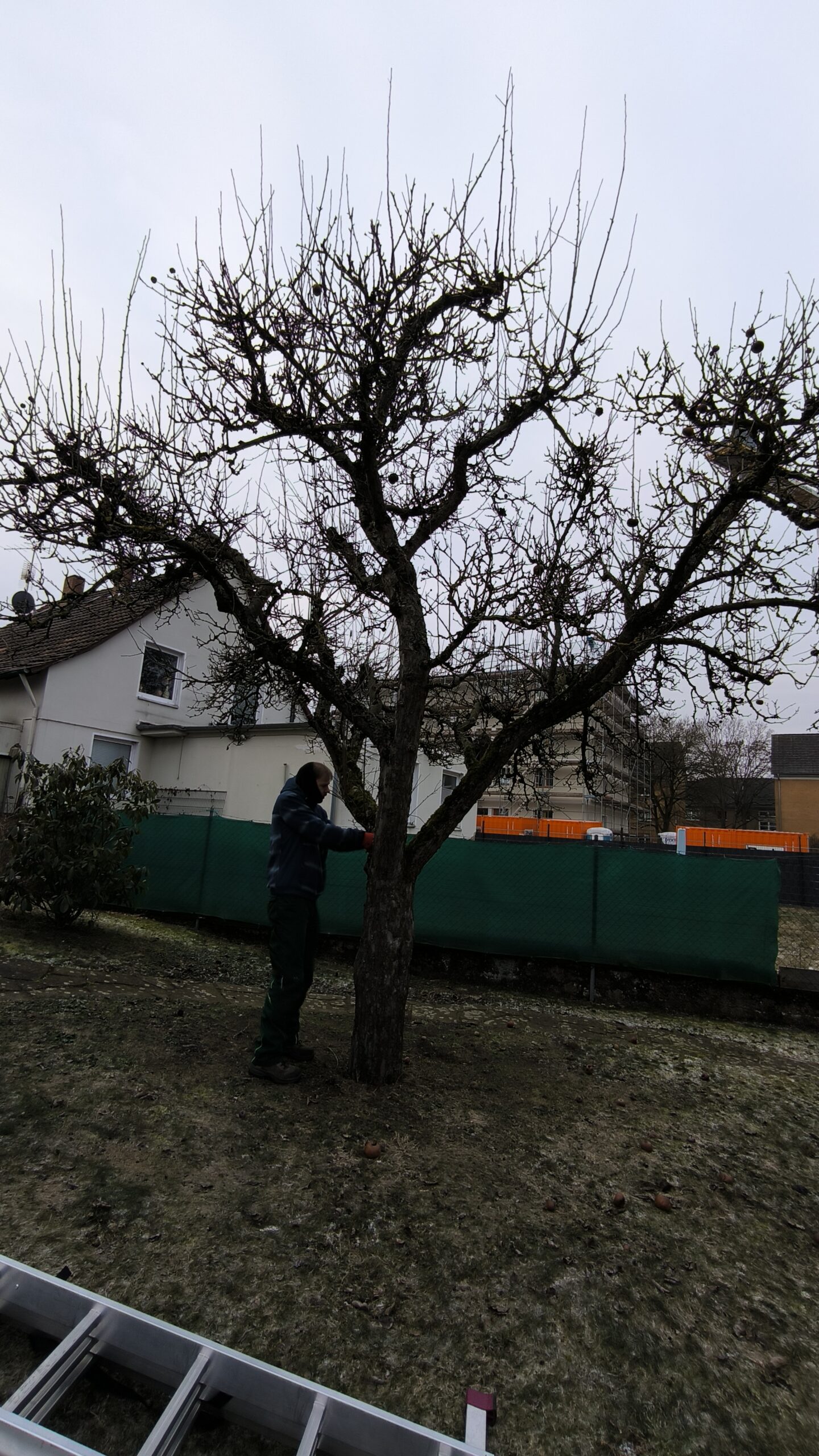
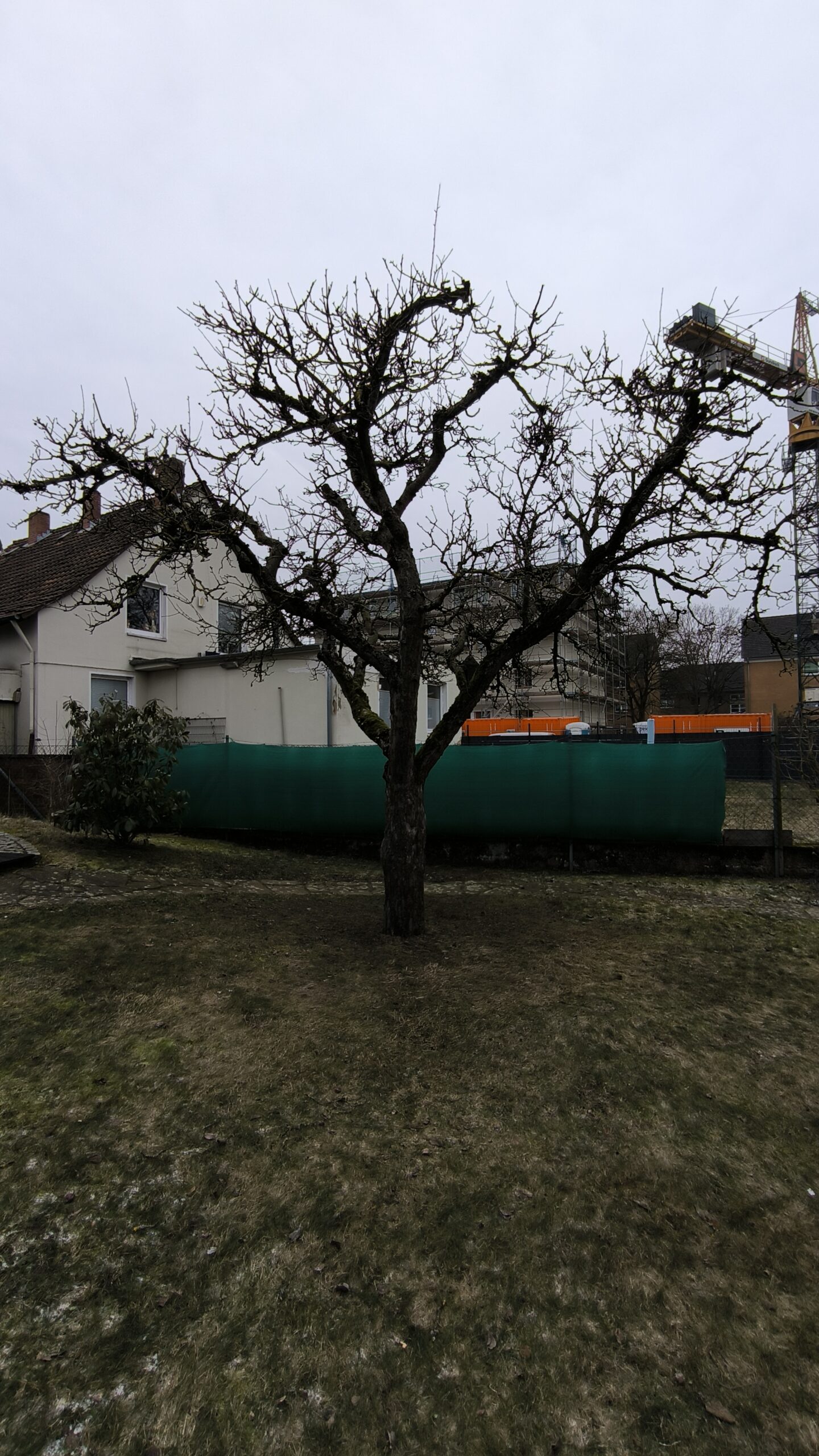
Pruning of the apple tree (Malus domestica)
🌲Coniferous trees (pines, spruces, firs, yews)
Coniferous trees generally require only minimal pruning. Rotten, broken, or diseased branches should be removed at any time to maintain the health of the trees. Late winter is especially suitable for removing unwanted lower branches.
Spruces and firs:
•They have lateral buds on the outer shoots.
•By shortening to a bud or a lateral shoot in early spring, denser growth is promoted.
Pines:
•They primarily grow from the terminal buds.
•Growth can be slowed in spring by removing the so-called ‘candles’ – the elongated terminal shoots – by half or two-thirds once they are about 5–8 cm long.
Yews:
•Very tolerant of pruning and well suited for hedges or shaped plants.
•A major pruning in late winter or early spring, along with a light shaping cut in summer, is sufficient to maintain the desired form.
Never cut into older wood, as no new growth will emerge there. Avoid pruning during active growth (late spring/summer), as this can impair the tree’s ability to photosynthesize and absorb energy, and may weaken its health.
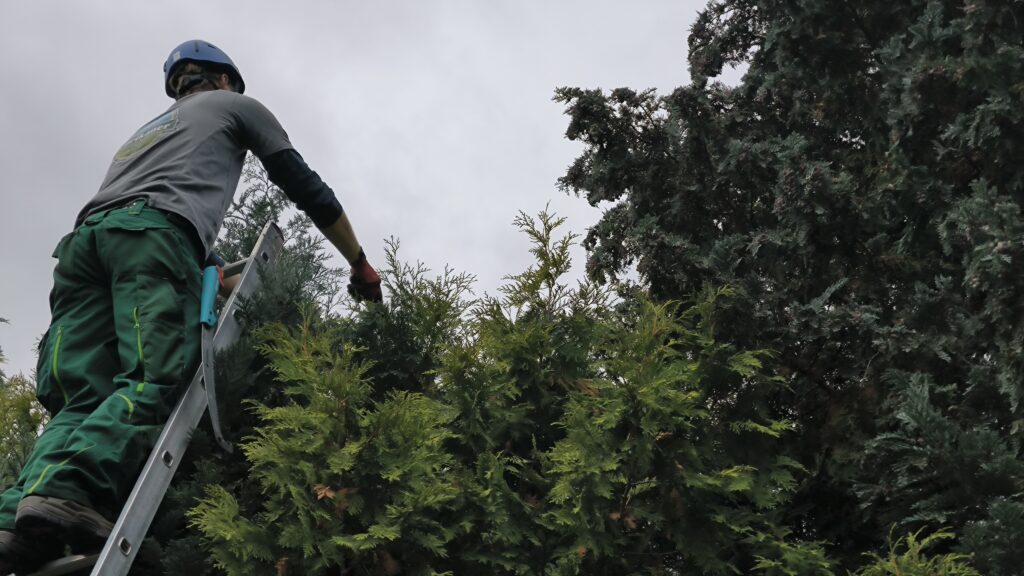
Pruning of the thuja (Thuja occidentalis)
Overgrown shrubs
Dead or severely overgrown shrubs often require a heavy rejuvenation pruning.
•Best time: February – March
•Even though heavy pruning may reduce or prevent flowering for 2–3 years, it restores the health of the plant.
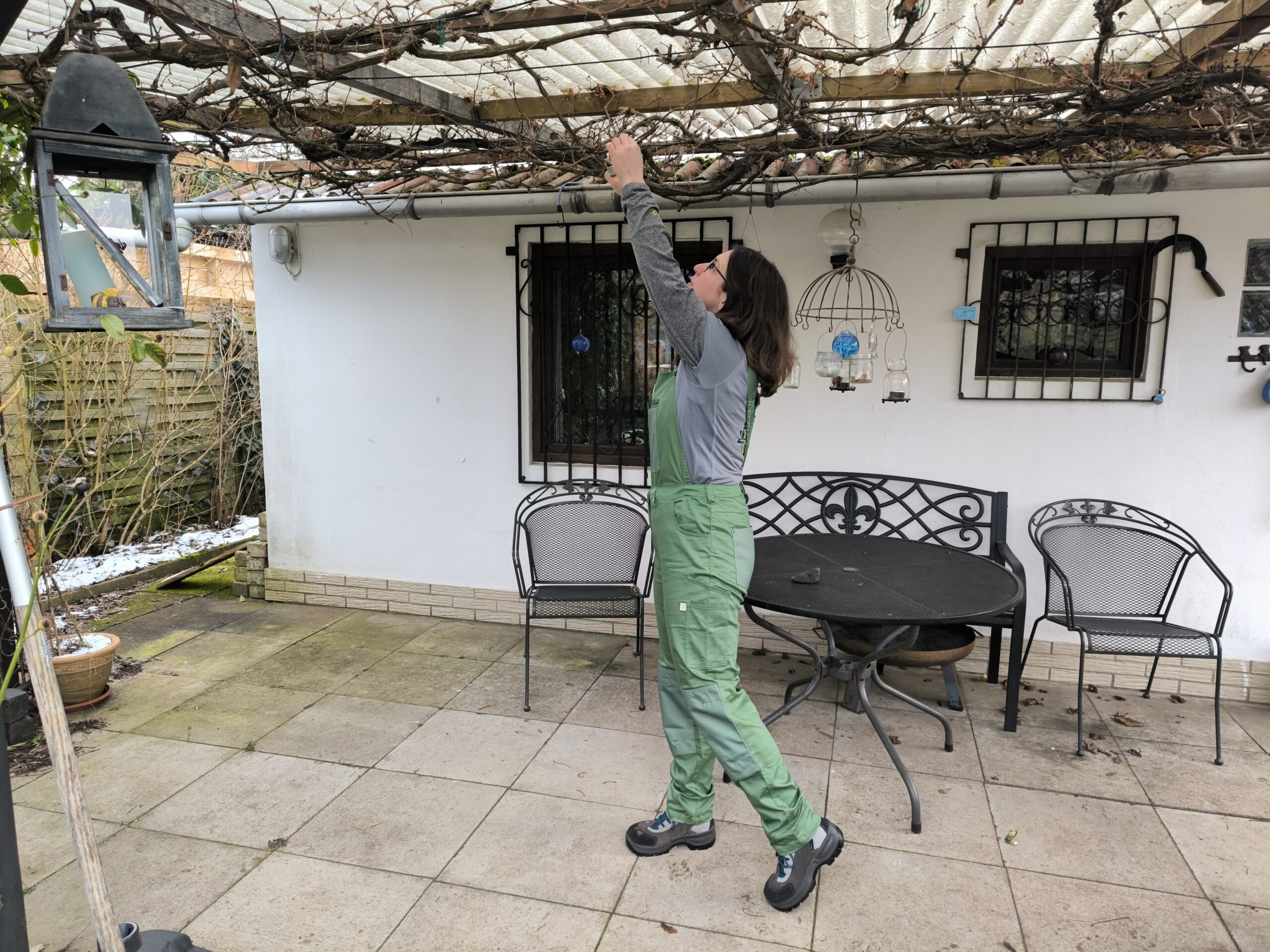
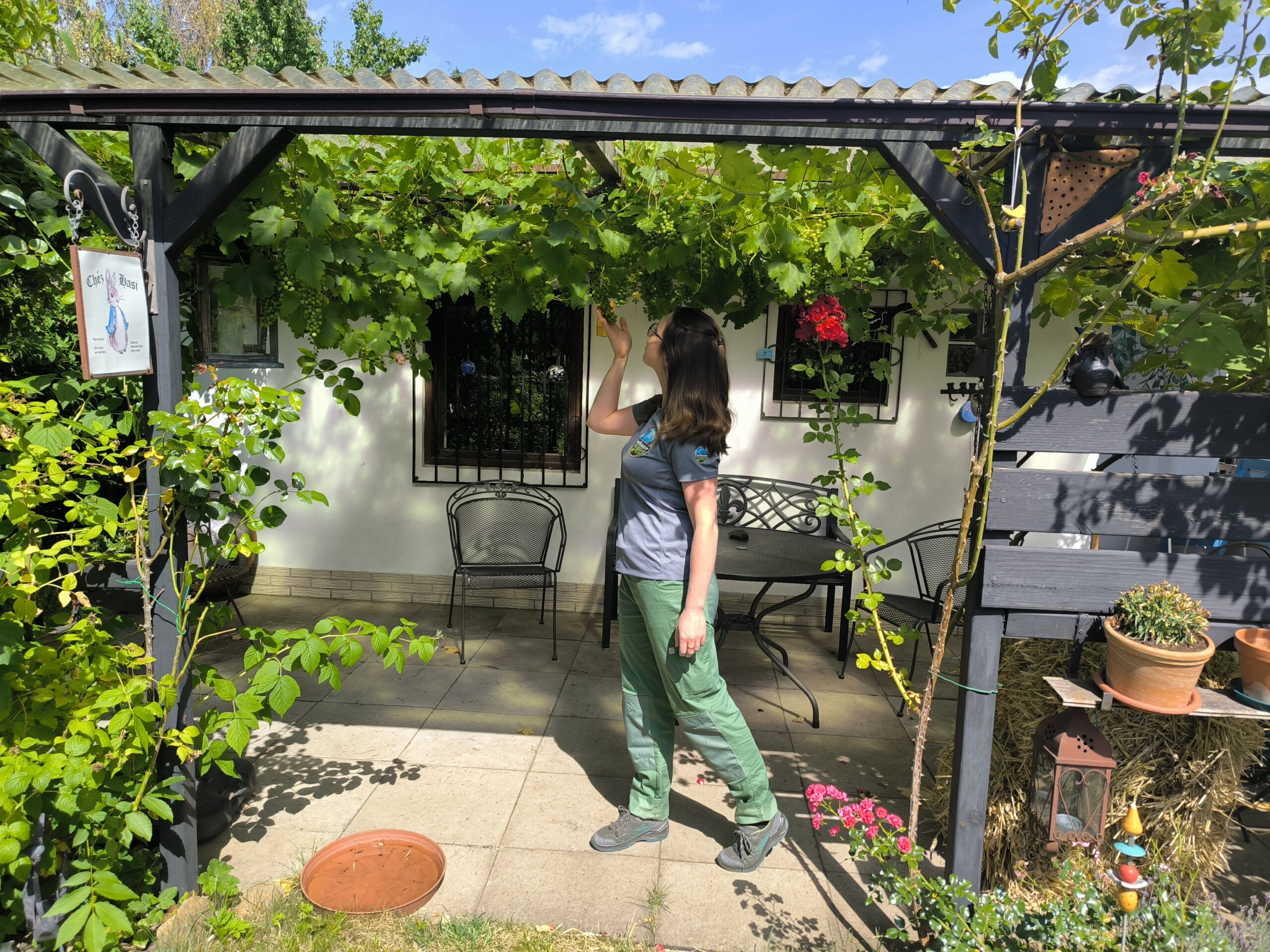
Pruning of the grapevine (Vitis vinifera)
Spring pruning
For shrubs or woody plants that bloom in spring (e.g., forsythia, lilac, ornamental currant, snow forsythia, rock cotoneaster, deutzia, weigela, spiraea, kerria, viburnum, magnolia, ornamental cherry, ornamental plum, laburnum, broom, hazel bush, sloe, ornamental apple, mahonia, rhododendron, azalea, and jasmine), pruning should after flowering be carried out, typically in late spring or immediately afterward..
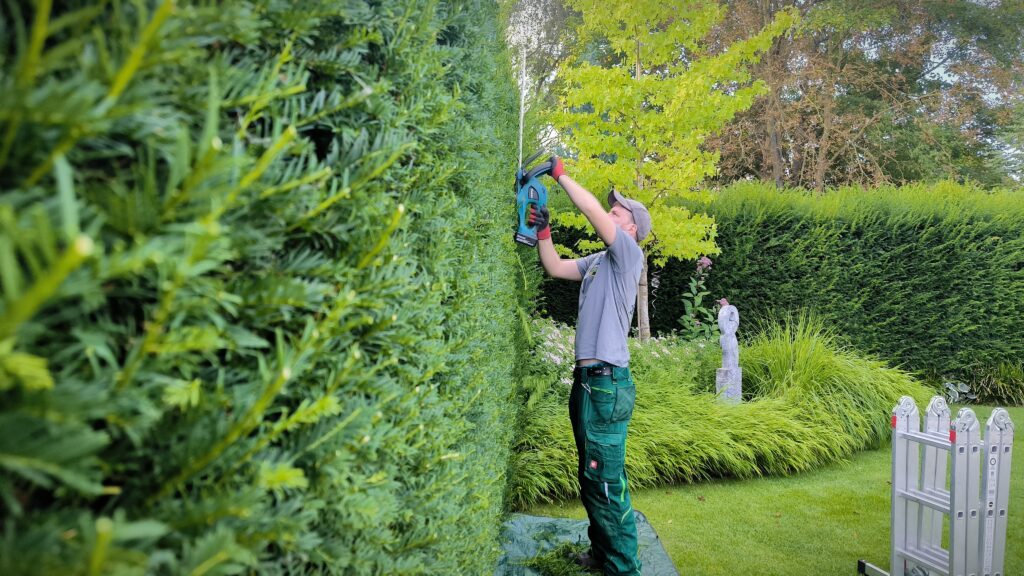
Pruning of the yew (Taxus baccata)
Summer pruning
A summer pruning can be useful to control growth (e.g., removing water sprouts, thinning the crown) or for certain species, especially for Stone fruit (Cherry – sweet and sour cherries, plum, damson, mirabelle, greengage, peach, nectarine, apricot, and almond).
Stone fruit should typically be in summer, from May to July be pruned after the fruits have been harvested. This timing helps prevent diseases such as Silver leaf and Bacterial canker which stone fruit is particularly susceptible to. Pruning in dry, warm weather further minimizes the risk of fungal and bacterial infections.
Pruning stone fruit trees in winter can lead to so-called ‘bleeding,’ as the sap closes the wounds more slowly, making the plants more susceptible to infections.
Pruning for formal hedges and structural plants.
Most deciduous shrubs should not be pruned into formal hedges, as this destroys their natural growth, reduces the number of leaves and flowers inside the crown, and leads to unsightly, short shoots at the ends of the branches.
Only a few species – for example, privet (Ligustrum vulgare, L. ovalifolium), alpine currant (Ribes alpinum), barberry (Berberis thunbergii, B. vulgaris), hornbeam (Carpinus betulus), European beech (Fagus sylvatica), field maple (Acer campestre), holly (Ilex aquifolium), thuja (Thuja occidentalis, T. plicata), yew (Taxus baccata), boxwood (Buxus sempervirens) – can be successfully maintained as formal hedges.
To maintain the shape, pruning should be done at least twice a year:
•First pruning in spring after bud break (May)
•Second pruning in mid-summer (July), if necessary.
Avoid heavy pruning after July, as this would promote new growth that would not harden sufficiently before winter.
Late-summer pruning of deciduous shrubs can trigger late growth that does not harden sufficiently before winter and is sensitive to frost.
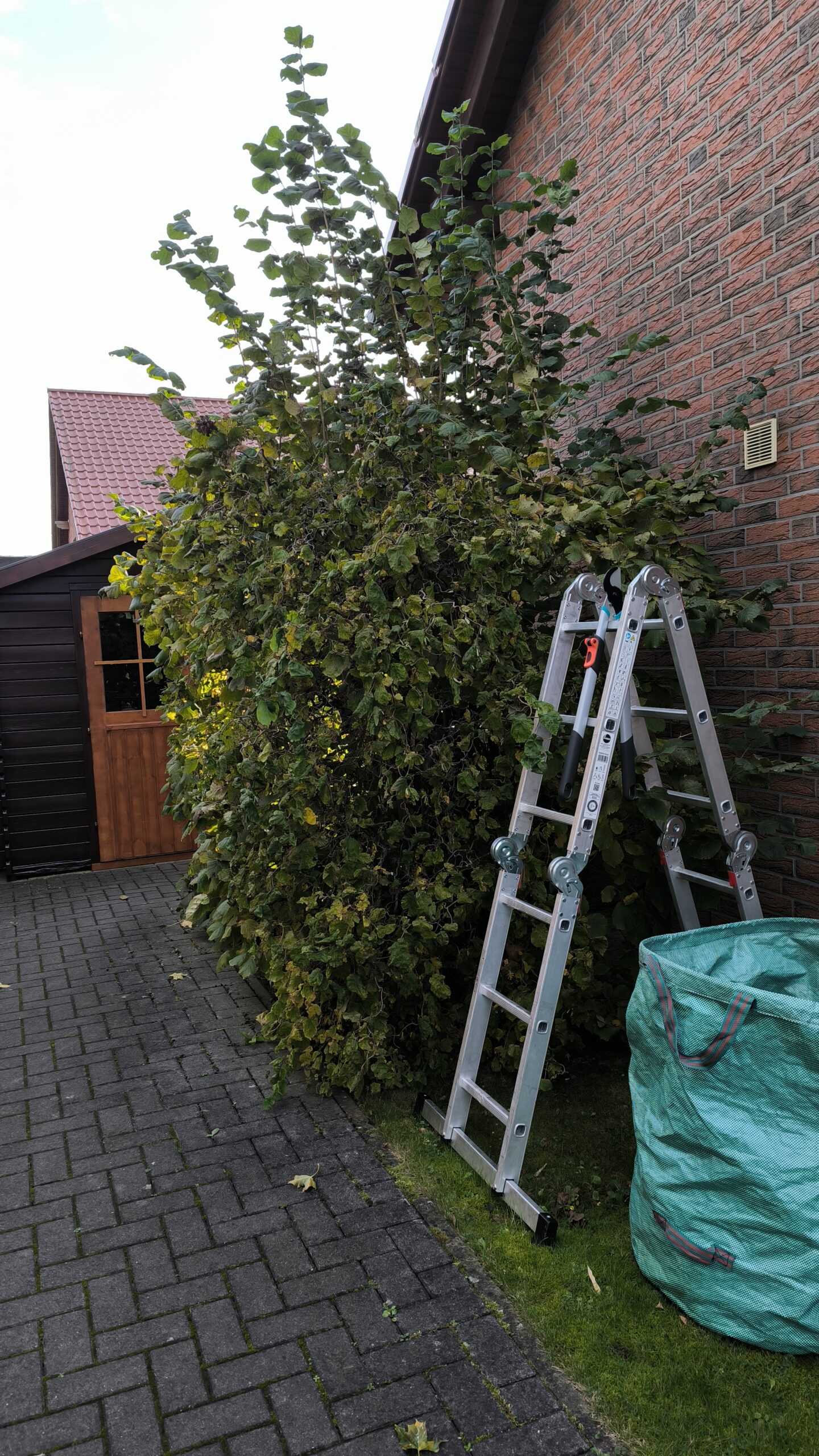
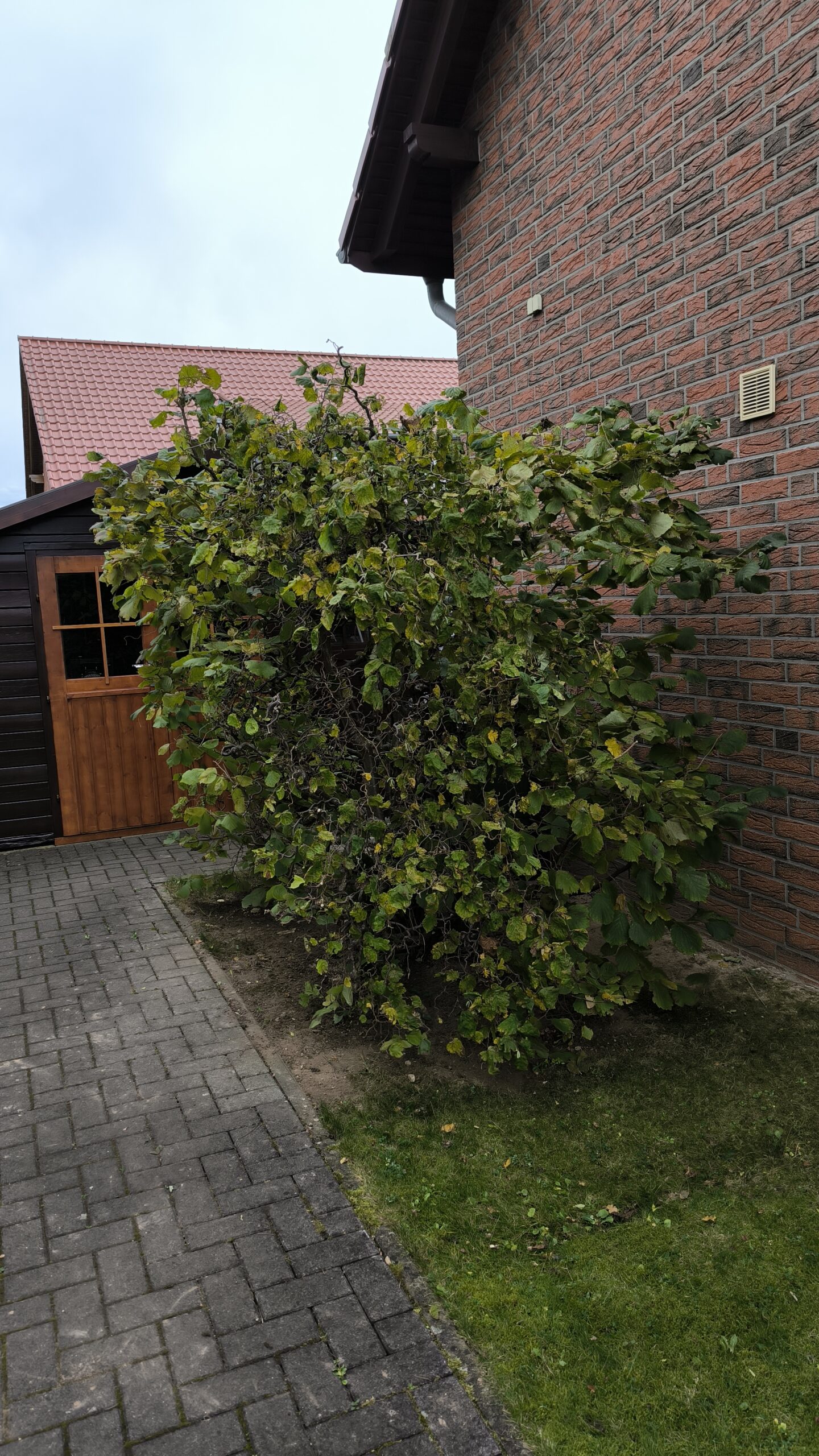
Corylus avellana – Pruning of the hazelnut
Decision when pruning
Dead branches are removed without hesitation – ideally by a thinning cutIf only part of a branch is dead, it is removed by a shortening cut removed just above a lateral shoot.
First, it should be assessed whether the tree is too tall, too wide, or too low-branched. Overlong branches can be shortened or completely removed. If the pruning is too severe, part of it can be postponed to the following year to avoid overloading the tree.
When selecting the branches to be removed, the following should also be taken into account:
•Branches that grow downward are usually weak.
•Upward-growing, so-called Water sprouts are too vigorous.
Both types should be removed. Branches that grow outward at a slight angle should be retained.
Rejuvenation pruning:
A rejuvenation pruning is carried out every two to three years when a shrub is overaged and the interior becomes bare. For trees, rejuvenation pruning is not done regularly, but only as needed, when the crown has become old, weakened, or low-yielding.
Source: https://yardandgarden.extension.iastate.edu/how-to/proper-time-prune-trees-and-shrubs
https://extension.umaine.edu/fruit/growing-fruit-trees-in-maine/pruning/
https://www.rhs.org.uk/advice/grow-your-own/features/summer-pruning-trained-stone-fruit
https://www.swr.de/leben/wohnen/baumschnitt-steinobst-sommer-sinnvoll-102.html